|
|
|
|
|
|
|

| 최근 이 책을 구매하신 다른 회원의 책장 |
|
 |
|
|
|
[ 책 소개 ]
* 1996년 New York Times Best Illustrated Book
영어책을 읽다보면 종종 등장하는 로마 숫자 표기법은 어린 아이들에게는 까다롭게 느껴질 수 있습니다. 이 책에서 저자는 농장에 사는 분홍색 돼지를 이용하여 로마 숫자의 원리를 쉽고 재미있게 깨우치게 도와주며, 아라비아 숫자에만 익숙해져 있는 아이들에게 로마 숫자가 만들어진 과정과 정확한 개념을 인지시켜 줄 수 있습니다.
7개의 로마 숫자(I, V, X, L, C, D, M)을 단독으로 사용하거나 조합하여 다양한 종류의 숫자를 만들 수 있습니다. 더하거나 빼는 조합을 통해 로마 숫자가 만들어지는 과정을 자세히 설명해 놓았으며 각각의 예시 그림을 함께 수록해 이해를 쉽게 합니다.
로마 숫자의 개념을 익힌 후 어린이들은 돼지와 농촌 마을에 등장하는 다른 사물들을 가지고 숫자를 세는 연습을 하게 됩니다.
| 닫기x | 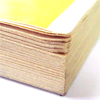 What is 페이퍼백? What is 페이퍼백?
표지가 두꺼운 판지나 보드지가 아닌 비교적 얇은 종이를 사용해서 만든 책이며, 실박음질 대신에 풀로 제본처리하는 경우가 많습니다. 일반적으로 하드커버나 보드북에 비해서 가격이 저렴합니다. 소프트커버로 불리우기도 합니다. 책의 이음새 부분이 접히거나 휘는 내구성이 그리 좋지는 않은 책입니다.
|
[ 서지 정보 ]
Edition: Paperback: 32 pages
ISBN: 0618153217
책 크기 : 24.8cm x 20.2cm
[ 영문 서평 ]
Book Description
With a farm of pigs as his abacus, Arthur Geisert uses elements of a search and count game to bring Roman numerals to life in this unintimidating math-concept book. First, the seven Roman numerals are equated with the correct number of piglets. Then the reader may practice counting other items—hot-air balloons, gopher holes, and more—as the remarkable adventure unfolds. (And yes, there are one thousand pigs in the etching for M!)
From the Publisher
Introduces Roman numerals, and by counting pigs in the illustrations the reader can reinforce the mathematical concept.
Publisher's Weekly
The porcine stars of Pigs from 1 to 10 teach kids to do as the Romans do in this numerical excursion. As Geisert exhorts readers to "count the number of pigs to find the value of [the seven single-letter Roman numerals]," pale pink pigs proliferate, romping on jungle gyms and seesaws, swimming, splashing, until, upon reaching "M," the pages are swarming. Parental guidance may be needed for those readers who lose count of the pigs on the way to 1000. Once the basics are conquered, Geisert explains how to add and subtract numbers to make other numbers (e.g., VIII). Again the pigs demonstrate, in a fancifully conceived barnyard cum playground setting rendered in Geisert's characteristically subdued palette. The mathematical adventure continues as readers practice newly acquired skills by hunting down XV balloons, IX ducks in a pond, etc.; the spreads become more colorful as piglets take to the air in festive balloons and head off on a field trip. As always, Geisert's detailed etchings reward extended perusal, and children will revel in the sheer abundance of pigs. A great lesson in Roman numerals, this book scores a certain X. All ages.
Children's Literature
Arthur Geisert who's shown us much about the world with his tiny, detailed drawings of pigs, now has his porcine favorites wander through the world showing off Roman Numerals. Ever playful, Geisert makes learning fun by having children search the pictures for examples of the concepts he briefly describes. This is the kind of book that makes adults envious. Where was Geisert when we faced the drudgery of learning? - Susie Wilde
Children's Literature
Intricate etchings of piglets depict the seven symbols of Roman numerals (I, V, X, L, C, D, and M) and numerous combinations of them. The text explains how Roman numbers are generated using addition and subtraction, for example with CC and IX respectively. Each numeral is accompanied by an etching with the correct number of piglets. Amazingly, there is one with M piglets! - Karen Saxe
School Library Journal
Children who learned their numbers from Geisert's Pigs from 1 to 10 (Houghton, 1992) can now move on to trickier fare with the author's latest offering. If there's one thing this book has, it's pigs-MMMDCCCLXIV of them. In addition to lots of useful information about Roman numerals (such as how to subtract a smaller number if it is before a larger one, and add it if it is after), the artist creates a lively learning experience by featuring picture puzzles in which children must count the pigs to determine the value of a numeral. This process is fairly straightforward for I, V, and X, but becomes downright hilarious for L, C, D, and M. The joyful, squealing menagerie continues from page to page, adding and dropping companions in a numeric frenzy. The searches become more challenging as the book progresses, prompting readers to find (in addition to XXXVII pigs) XIX trees or XXVIII fence posts. There is plenty of visual detail for early-elementary age children to pore over, and Geisert is careful to be methodical and predictable in his examples (though he is appropriately mysterious when it comes to more involved scenes). This book might do for Roman numerals (and for pigs) what Carmen Sandiego did for geography: highlight the spontaneous humor and enjoyment in an unrightfully maligned topic.Jennifer Fleming, Boston Public Library
Booklist
This introduction to roman numerals challenges children to learn a new (well, actually an old) system of writing and reading numbers. Like the best foreign-language teachers, Geisert avoids translation and encourages his readers to figure out the meaning of the roman numerals. He teaches the concept through the concrete use of pictures of piglets at play, beginning with slender, vertical panels illustrating I, V, X pigs, up to double-page spreads crowded with D and even M pigs. The later pages challenge readers to decipher roman numerals that have been combined to create useful numbers, either by using the Roman system or by counting objects in the pictures: XXVIII fence posts, VII clouds, or VL pigs. Geisert's etchings, tinted with washes, make lively and beautifully detailed illustrations for this unusual book. Carolyn Phelan |
|
|
|
|
|
|
|
|







 - 등록된 128,148건의 서평이 있습니다.