|
|
|
|
|
|
|

| 최근 이 책을 구매하신 다른 회원의 책장 |
|
 |
|
|
|
[ 책 소개 ]
작가가 직접 그린 풀컬러 일러스트와 운문 형식의 글로 구성된 이 책은 어린 독자들을 위대한 발명가들의 생각 속으로 초대하며, 상상력을 발휘하도록 격려합니다. 또한 롤러스케이트, 감자칩, 안경, 진공청소기 등 우리가 일상생활에서 쉽게 접하고 편리하게 사용하고 있는 다양한 물건들이 어떤 창의적인 과장을 거쳐 탄생했는지를 흥미롭게 보여줍니다.
충분한 조사를 바탕으로 쓰였지만, 작가는 주석에서 “창의적인 이야기 구성 또한 이 이야기들을 들려주기 위해 사용되었다”고 독자들에게 얘기합니다. 각 페이지마다 세개의 테두리는 해당 물건의 형태를 보여주는 작은 퀼트 같은 사각형들로 둘러싸여 있으며, 오른쪽 테두리에는 해당 발명품에 대한 간략한 정보들이 정리되어 있어서 독자들에게 충분한 정보를 제공해 줍니다.
튼튼한 | 닫기x | 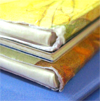 What is 하드커버? What is 하드커버?
양장본이라고도 불리우며, 표지가 단단한 판지로 만들어진 책입니다.
판지를 천이나 가죽으로 감싸기도 합니다. 책의 속지는 일반적으로 중성처리된 종이(Acid-free paper)를 사용해서 잘 변질이 되지 않기 때문에 오랫동안 보관하기에 적합합니다. 이 종류의 책은 더스트 재킷, 또는 더스트 커버로 불리는 표지덮개가 함께 있는 경우가 많습니다. 간혹 내부 속지가 콩기름 코팅이 된 경우 고약한 냄새가 나는 책도 있습니다.
|
[ 서지 정보 ]
Hardcover: 32 pages
ISBN-10: 0316347256
ISBN-13: 978-0316347259
책 크기: 22.3 cm x 28.4 cm
[ 영문 서평 ]
Book Description
Written in verse and filled with full-color illustrations drawn by the author, this book invites young readers inside the minds of great inventors, encouraging them to think imaginatively as it offers the origins of items such as roller skates, potato chips, eyeglasses, the vacuum cleaner, and more.
Publishers Weekly
In this edifying volume, Harper (When I Grow Up) explains how such everyday things as gum, skates and potato chips came to be, though she qualifies her research by noting that "creative storytelling and imagination were also used to tell these tales." For instance, piggy banks originated from vessels made of a clay called pygg; Harper speculates, "Some potter probably said,/ after giving it some thought,/ `What if I take my fine pygg clay/ and make a pig-shaped pot?' " High-heeled shoes, which first appeared in 16th-century France, inspire a tall tale about a short king. The vacuum-cleaner's innovator is depicted as a neat freak who tries to inhale dirt from his furniture: "1901 was the year/ that he built his first machine./ It took two men to operate/ but really got things clean." Harper maintains a lighthearted mood by describing each item in doggerel verse. She paints naive portraits of inventors at work, frames each spread with a thematic border and provides trivia about her humble subjects ("The most popular doughnut with kids is the chocolate frosted"). With its crazy-quilt visual patterns, bouncy stanzas and fun facts, this miscellany zigzags between informational and whimsical.
School Library Journal
Children who are interested in the origins of things will enjoy this whimsical look at how piggy banks, doughnuts, eyeglasses, high-heeled shoes, chewing gum, and more were created. Each of the 14 inventions is covered in a two-page spread. The main text is composed of four-line stanzas that note the date (or time period) of the invention and relate how the idea evolved. The verses are fun and anecdotal, such as the one about the violin-playing inventor of roller skates. "The night of the big party,/with wheeled skates upon his feet,/Joseph glided in while playing/and the crowd said, `Oh, how sweet.'" The busy pages each have a brightly colored background with thematic borders. On the right side of the spread, they list the inventor, place and date of the invention, and interesting facts and statistics about it. Fanciful cartoons are interspersed with the text. For a more conventional approach to the development of common things, Charlotte Foltz Jones's Accidents May Happen (Delacorte, 1996) is a good choice. |
|
|
|
|
|
|
|
|







 - 등록된 128,148건의 서평이 있습니다.