|
|
|
|
|
|
|

| 최근 이 책을 구매하신 다른 회원의 책장 |
|
 |
|
|
|
[ 책 소개 ]
Lemony Snicket의 세계적인 베스트셀러인 Unfortunate Events 시리즈의 일곱번째 이야기인 The Vile Village입니다. 화재로 인해 하루아침에 고아가 되어 버린 보들레어 가의 삼남매가 아이들의 유산을 가로채려는 천재적인 악당 올라프 백작의 계략과 맞서 싸우는 흥미진진한 내용입니다.
책의 옆면을 재단을 하지 않은 상태로 제본을 해서 고서의 분위기를 느끼도록 만든 "| 닫기x | 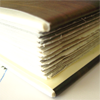 What is 클래식 제본? What is 클래식 제본?
인위적으로 제본시 절단면을 매끄럽게 만들지 않고 책의 옆면을 재단을 하지 않은 상태로 제본을 해서 고서의 분위기를 느끼도록 만들어진 방식입니다. 매끄럽지 않다는 특성 때문에 페이지를 쉽게 넘길 수 있다는 것이 장점입니다.
|
| 닫기x | 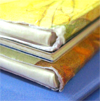 What is What is | 닫기x | What is 하드커버?
양장본이라고도 불리우며, 표지가 단단한 판지로 만들어진 책입니다.
판지를 천이나 가죽으로 감싸기도 합니다. 책의 속지는 일반적으로 중성처리된 종이(Acid-free paper)를 사용해서 잘 변질이 되지 않기 때문에 오랫동안 보관하기에 적합합니다. 이 종류의 책은 더스트 재킷, 또는 더스트 커버로 불리는 표지덮개가 함께 있는 경우가 많습니다. 간혹 내부 속지가 콩기름 코팅이 된 경우 고약한 냄새가 나는 책도 있습니다.
|
양장본이라고도 불리우며, 표지가 단단한 판지로 만들어진 책입니다.
판지를 천이나 가죽으로 감싸기도 합니다. 책의 속지는 일반적으로 중성처리된 종이(Acid-free paper)를 사용해서 잘 변질이 되지 않기 때문에 오랫동안 보관하기에 적합합니다. 이 종류의 책은 더스트 재킷, 또는 더스트 커버로 불리는 표지덮개가 함께 있는 경우가 많습니다. 간혹 내부 속지가 콩기름 코팅이 된 경우 고약한 냄새가 나는 책도 있습니다.
|
| 닫기x | What is 하드커버?
양장본이라고도 불리우며, 표지가 단단한 판지로 만들어진 책입니다.
판지를 천이나 가죽으로 감싸기도 합니다. 책의 속지는 일반적으로 중성처리된 종이(Acid-free paper)를 사용해서 잘 변질이 되지 않기 때문에 오랫동안 보관하기에 적합합니다. 이 종류의 책은 더스트 재킷, 또는 더스트 커버로 불리는 표지덮개가 함께 있는 경우가 많습니다. 간혹 내부 속지가 콩기름 코팅이 된 경우 고약한 냄새가 나는 책도 있습니다.
|
[ 서지 정보 ]
Edition: Hardcover: 272 pages
ISBN: 0064408655
책 크기: 18.5cm x 13.1cm
[ 영문 서평 ]
Book Description
Under a new government program based on the saying "It takes a village to raise a child," the Baudelaire orphans are adopted by an entire town, with disastrous results.
From the Publisher
Dear Reader, You have undoubtedly picked up this book by mistake, so please put it down. Nobody in their right mind would read this particular book about the lives of Violet, Klaus, and Sunny Baudelaire on purpose, because each dismal moment of their stay in the village of V.F.D. has been faithfully and dreadfully recorded in these pages.
I can think of no single reason why anyone would want to open a book containing such unpleasant matters as migrating crows, an angry mob, a newspaper headline, the arrest of innocent people, the Deluxe Cell, and some very strange hats.
It is my solemn and sacred occupation to research each detail of the Baudelaire children's lives and write them all down, but you may prefer to do some other solemn and sacred thing, such as reading another book instead.
With all due respect,
Lemony Snicket
Children's Literature
If you have not become acquainted with the Baudelaire children, now is the time to change that. Violet, Klause and Sunny are orphans who lost their parents in a horrible fire and have since been shuffled from one eccentric relative to another, each time having to leave when the evil Count Olaf finds them and tries to kill them. In the seventh book in the "A Series of Unfortunate Events" series, the children have finally run out of relatives and are sent to the village of V.F.D. to be raised by the entire village ("it takes a village to raise a child"). However, the townspeople believe that a child should be seen and not heard and should be at work and not at play so the children are put to work immediately. It turns out that V.F.D. means Village of Fowl Devotees and crows are EVERYWHERE. To make things worse, they are still not safe from Count Olaf, who has hatched another evil plan to get the money left to them by their parents. Don't let the tragic summary fool you. This book is actually a humorous and highly entertaining novel. The orphans are extremely intelligent and escape from the various traps in ingenious ways. The author tells the story slowly and with many ventures off the topic but this only heightens the humor (and often gives a good vocabulary lesson.) This book, like the other books in the series, is highly recommended.
VOYA
A Series of Unfortunate Events chronicles the perilous adventures of the Baudelaire children, thirteen-year-old Violet, twelve-year-old Klaus, and toddler Sunny. They were orphaned when their wealthy parents died in a tragic accident. Their parents' bank places them with a series of totally unsuitable guardians, from whom they must always make their escape. The evil Count Olaf lusts after their inheritance and continually tries to capture them. In every book in the series, he appears in a disguise that no adult can penetrate, yet the children always know it is he. In The Vile Village, Mr. Poe sends the Baudelaires to a village called V. F. D. The children know those initials have a dire significance for their friends, and they go willingly enough, only to find themselves in more trouble. The village council assigns them to work with the handyman, Hector, to do all the chores in the village. He is a kind man, but the village rules are impossible to follow. Then the Baudelaires discover mysterious messages from Isadora, and the village captures someone the new female police chief announces is Count Olaf—but who actually is an unfortunate fellow named Jacques. When Jacques is found dead the next morning, Detective Dupin arrives, but he is really Olaf. Naturally none of the adults except perhaps Hector believe the children, and they end up being murder suspects. Books in this series are reminiscent of Victorian melodrama. They are full of anachronisms, and the people and events are completely outlandish—readers must suspend disbelief and go along for the ride. Younger teens with a lively sense of the ridiculous will appreciate the preposterous plots and predicaments, and older teensmight enjoy the wordplay as evidenced in some of the characters' names. For others, a small dose of Snicket will go a long way. Reading the books in order—beginning with The Bad Beginning (HarperTrophy, 1999), The Reptile Room (1999), The Wide Window (2000), The Miserable Mill (2000), and The Austere Academy (2000)—is preferred, but one will not feel lost by starting with any. Libraries already owning the series in their children's departments will not need an additional set, except perhaps for larger facilities. Middle schools with generous budgets also might want to acquire the books.
School Library Journal
The resourceful, likable, but extremely unlucky orphans Violet, Klaus, and baby Sunny continue to flee from the clutches of the fortune-hunting, disguise-wearing Count Olaf. Also, they need to discover the whereabouts of their kidnapped friends, Duncan and Isadora Quagmire, based on the puzzling clue "V.F.D." In Elevator, the three Baudelaires go to live in the penthouse of the trend-following Jerome and Esm Squalor, who adopt the children because orphans are "in." Despite the Baudelaires' resourcefulness, both Olaf and the Quagmires elude the grasp of the authorities due to the obtuseness of adults who, until it is too late, deny that terrible things can happen. In Village, the Baudelaires travel to V.F.D., a village that adopts the orphans based on the aphorism, "it takes a village to raise a child." They uncover the whereabouts of the Quagmires, but, as in the earlier books, they find neither respite nor peace from Count Olaf's machinations. Despite Snicket's artful turning of clich s on their well-worn heads, Elevator sometimes belabors the fallacy of fads at the expense of plot. Nonetheless, the satiric treatment of adults' insistence upon decorum at the expense of truth is simultaneously satisfying and unsettling, as are the deft slams at slant journalism in Village. Arch literary allusions enhance the stories for readers on different levels. Despite Snicket's perpetual caveats to "put this book down and pick up another one," the Baudelaires are dynamic characters who inspire loyalty to the inevitable end of the series. |
|
|
|
|
 |
제품상제정보 배송/반품/교환 안내 |
|
|
|
Super Buy 도서는 미국 출판사의 재고도서(Remainder Book), 초과출간도서(Excess Inventory), 할인도서(Bargain Books)
등을 직수입해서 정가의 55%~80%를 할인한 가격에 판매하는 제품입니다.
Super Buy 책의 품질은 거의 새 책과 같은
수준이지만, 간혹 커버의 스크래치나 접힘과 같은 하자나, 책 하단의 재고도서 마크가 있을 수 있습니다.
저렴하게 판매하는 Super Buy 제품의 특성상 반품이 되지 않습니다만, 파본인 경우에는 착불로 반품하시면 책값을
환불해드리거나 적립금으로 올려드립니다. (반품 전에 연락 요망)
하프프라이스북에서는 중고도서(second hand book)를 취급하지 않습니다.
|
|
|
 - 등록된 128,146건의 서평이 있습니다. - 등록된 128,146건의 서평이 있습니다.
| 더보기 
|
|
|
|
|
|
|
 |
|
|
|
|
|
|




 Village of Fowl Devotees

 정말 재미날것 같아요~~ㅎㅎ
 특이한 제본으로 고풍스런 분위기~