|
|
|
|
 |
 이전 | 이전 |  목록 | 다음 목록 | 다음 |
|
|
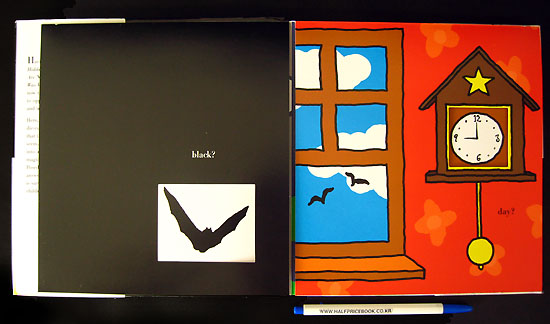
상세보기1 |
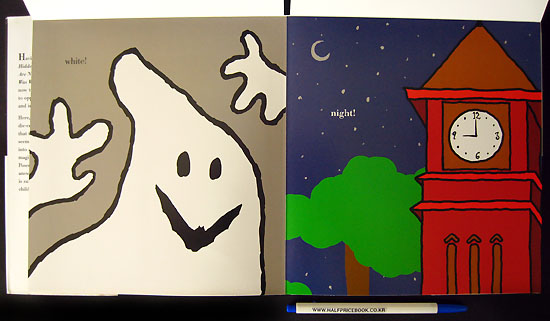
상세보기2 |
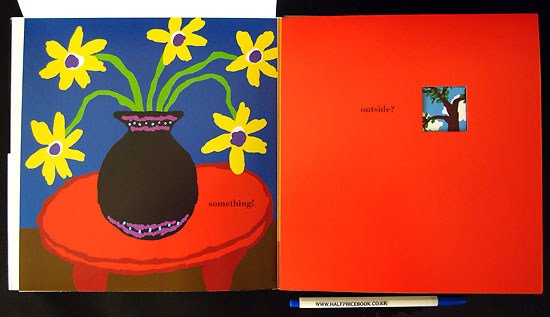
상세보기3 |
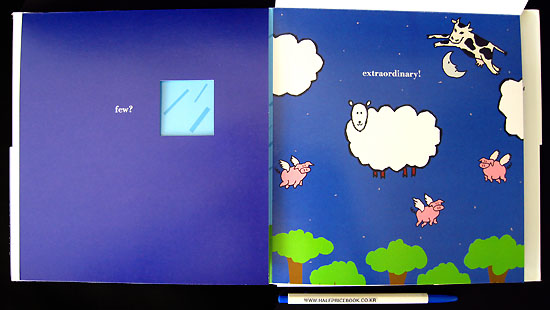
상세보기4 |
상세보기5 |
|
확대 이미지 : 상세보기1
|
확대 이미지 : 상세보기2
|
확대 이미지 : 상세보기3
|
확대 이미지 : 상세보기4
|
확대 이미지 : 상세보기5
|
[ 책 소개 ]
* ALA Notable Children's Books
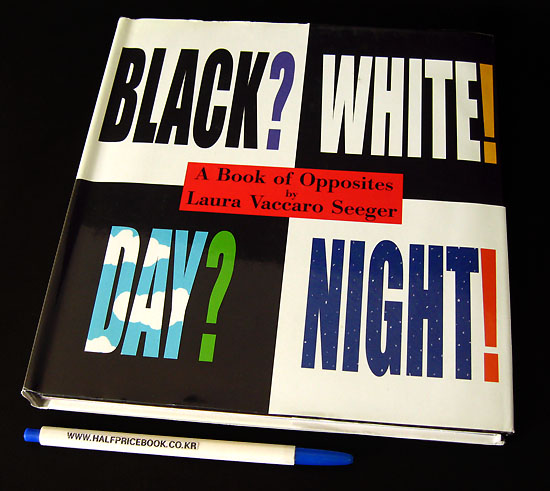
작가의 신선한 아이디어가 돋보이는 반대말 책입니다. 플랩으로 되어 있는 각 페이지마다 구멍이 뚫려 있어서 앞페이지나 뒷페이지의 그림 중 일부를 보여주며, 플랩을 열면 구멍을 통해 보던 이미지와는 정반대의 상황을 보여줍니다.
플랩을 열면 구멍 너머에 어떤 그림이 펼쳐질지 상상하는 즐거움이 있으며, 어린 독자들이 쉽고 재미있게 반대말의 개념을 익힐 수 있습니다.
예를 들면, 상세보기 첫번째 그림에는 까만 바탕 속에 구멍이 뚫려 있고 구멍 속으로 검은 박쥐가 보입니다만(Black), 플랩을 열면 (두번째 상세보기 그림) 검은 박쥐는 하얀 유령의 입으로 변합니다(White).
이런 형식으로 낮이 밤이 되고, 좁은 것이 넓은 것으로 변하며, 따르는 사람이 이끄는 사람으로 변하고, 조그만 것이 거대한 것이 되는 등 총 18세트, 36개의 반대되는 단어들을 재미있게 배울 수 있습니다.
튼튼한 하드커버 책입니다.
[ 서지 정보 ]
Hardcover: 38 pages
ISBN-10: 1596431857
ISBN-13: 978-1596431850
책 크기: 22.8cm x 21.1cm
[ 영문 서평 ]
Book Description
Having explored the alphabet (The Hidden Alphabet), colors (Lemons Are Not Red), and emotions (Walter Was Worried), Laura Vaccaro Seeger turns her extraordinary talents to opposites in this bright, colorful and imaginative book. Through a series of ingenious die-cut pages, the reader discovers things that are the opposite of what they seem: A black bat transformed into a white ghost, a sunny day that becomes a starry night. Posed as a series of 18 questions and answers, Black? White! Day? Night! is sure to be a big success with small children everywhere.
From School Library Journal *** Starred Review
Clever compositions, a question/answer format, and sturdy die-cuts distinguish this title from many other concept books. Seeger employs flat, vibrant colors and bold contrasts between the framing page that lifts up and the design underneath. While some of the word pairs are familiar, the images are nevertheless surprising: a black bat turns out to be the upturned mouth of a white ghost. An ordinary sheep becomes extraordinary when discovered in a cloudy sky with flying pigs and a cow jumping over the moon. Blue diamonds that look very much alike are actually quite different when they are discovered inside unique snowflakes. Younger children will delight in the magical effect of the transformation, while those a little older will have fun anticipating and analyzing the process itself, propelled by the pattern in which each question yields the unexpected. The title's creative approach offers a variety of possible paths for connection. Books such as Lois Ehlert's Color Zoo (HarperCollins, 1989) or N. N. Charles's What Am I?: Looking through Shapes at Apples and Grapes (Scholastic, 1994) would extend the visual gymnastics for preschoolers, while titles such as Roni Schotter's The Boy Who Loved Words (Random, 2006) would continue adding to a school-aged child's store of language. Opposites attract and expand in this playful celebration
From Booklist *** *Starred Review
Bold colors, carefully placed cutouts, and full-page lift-the-flaps make this much more than just another concept book about opposites. Children will be captivated from the very first page: a large black flap with a cutout revealing a black bat set against a pure white background. The single word black? printed in white, stands out clearly on the page. When kids lift the flap, they'll see the word white! (in white type) and discover that what appeared to be a bat is really the mouth of a ghost. Each of 18 opposites is similarly conveyed using only one word and the lift of a flap: a "follower" becomes a "leader"; a "tiny" bug becomes the eye of a "huge" elephant. Each flap is a different bold color, ensuring that the child won't miss the word or the figure representing the concept, and the scenes under the flaps are in keeping with the simple yet sophisticated graphic design of the book. Thick, shiny pages add to the sense of richness. From "front" to "back" and "beginning" to "end," this is a winner.
|
| * 최근 이 작품을 구입하신 분들의 다른 선택 |
Dave the Potter
Caldecott 수상작, 하드커버, 슈퍼바이 |
The Berenstain Bears' New Kitten
An I Can Read Book, 1단계, 슈퍼바이 |
The Hello, Goodbye Window
Caldecott Medal 수상작, 하드커버, 슈퍼바이 |
Happy Birthday, Danny and the Dinosaur!
An I Can Read Book, 1단계, 슈퍼바이 |
|
| |
|
|< << [1] [2] [3] [4] [5] [6] [7] [8] [9] [10] >> >|
|
|
|



 전체 카테고리


 실시간 벼룩
 종류별 분류


 재고가 없는 상품