|
|
|
|
 |
 이전 | 이전 |  목록 | 다음 목록 | 다음 |
|
확대 이미지 : 상세보기1
|
확대 이미지 : 상세보기2
|
확대 이미지 : 상세보기3
|
확대 이미지 : 상세보기4
|
[ 책 소개 ]
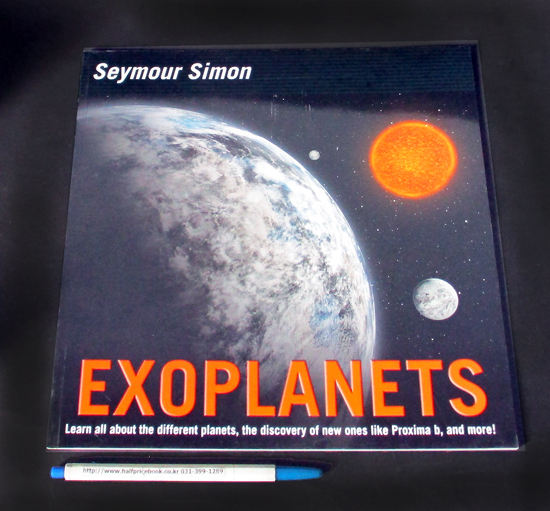
250권 이상의 어린이 과학도서를 집필하고, New York Academy of Sciences Children's Book Award와 Washington Post/Children's Book Guild Award 등 수많은 수상경력을 지니고 있는 Seymour Simon의 과학사진책 시리즈입니다. 주제별로 자세한 설명과 함께 생동감 넘치는 커다란 사진들이 수록되어 있어서 어린 아이들이 흥미를 갖고 즐기면서 과학에 대한 폭넓고 깊이 있는 지식을 습득할 수 있습니다.
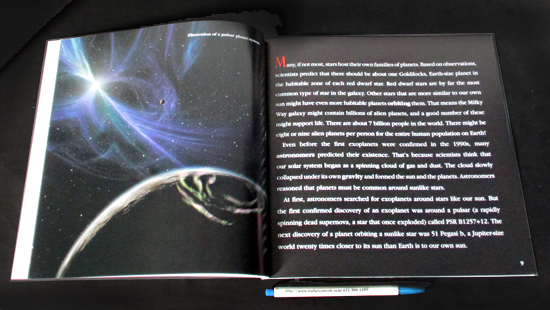
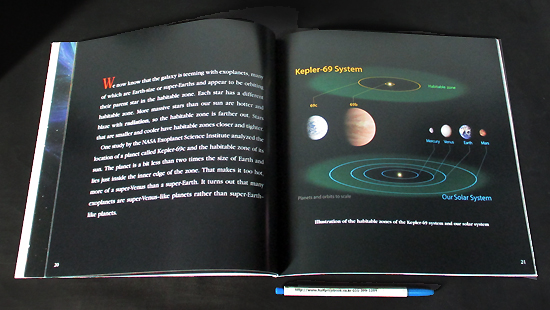
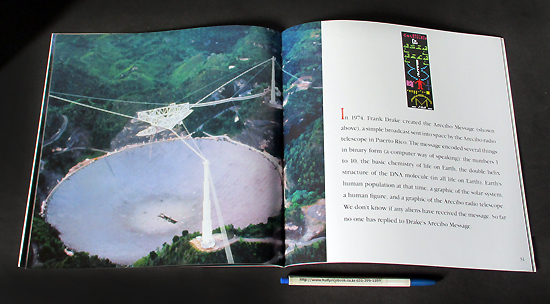
이 책에서는 우리가 살고 있는 지구가 포함된 태양계의 밖에 존재하는 외계행성에 대해서 소개하며, 한 페이지 가득 채우는 커다랗고 선명한 사진들을 통해 저 먼 우주 속에서 별들 주위를 돌고 있는 행성들에 대해서 자세히 소개합니다.
태양계 밖에는 은하계 내에만도 1천억개의 별들이 존재하며, 그 별들은 우리의 태양과 마찬가지로 행성들을 거느리고 있는 경우도 있습니다. 이런 태양계 밖의 행성들을 외계행성이라고 합니다. 과학자들은 이런 외계행성들을 찾기 위해 끊임없이 노력해 왔으며, 이를 통해 우주에서 생명체가 살고 있을 가능성을 연구하고 있습니다. 생명체가 살기 위해서는 지구와 같이 너무 뜨겁지도 않고 너무 춥지도 않으며, 너무 크지도 않고 너무 작아서도 안되지요.
지난 20여년 동안 과학자들은 2천개 이상의 별 주위를 돌고 있는 3천여개의 외계행성을 찾아냈으며, 이 책에서는 현재까지 발견된 대표적인 외계행성들과 이런 외계행성들의 신비로운 모습, 그리고 생명의 존재 가능성과 최근의 연구동향들을 선명한 실사사진들과 함께 자세히 보여줍니다.
우주와 과학에 대해서 흥미를 지니고 있는 아이들에게는 각 페이지에 수록된 선명한 실사 사진들만으로도 큰 즐거움을 주는 책입니다.
[ 서지 정보 ]
Paperback: 48 pages
ISBN-10: 0062470574
ISBN-13: 978-0062470577
책 크기: 25cm x 25cm
[ 영문 서평 ]
Book Description
Award-winning science writer Seymour Simon explores the farthest reaches of space in the brand-new Exoplanets! This nonfiction picture book is an excellent choice to share during homeschooling, in particular for children ages 6 to 8. It’s a fun way to learn to read and as a supplement for activity books for children.
There are thousands of exoplanets scattered throughout the Milky Way galaxy, and scientists are on a constant quest to find one just like Earth. In Exoplanets, Simon examines the planets outside of our solar system and uncovers what makes them habitable, our efforts to discover new life, and more.
With clear, simple text and stunning full-color photographs, readers will explore the farthest reaches of space and explore the answer to the question: do aliens exist?
This book includes an author's note, a glossary, an index, and supports the Common Core State Standards.
School Library Journal
Carefully tailoring his presentation to keep it from dating too rapidly, the veteran science explainer surveys one of the hottest areas of discovery in astronomy today. After opening with a definition of the "Goldilocks" zone (the area in which habitable exoplanets must orbit in order to be not too hot, not too cold, etc.), he goes on to mention the ingenious methods by which "more than several thousand" exoplanets have been spotted, describes what can be deduced about them from observational evidence, then closes with ruminations about why both the Search for Extraterrestrial Intelligence (SETI) that has been going on since 1960 and the more recent Breakthrough Listen project have failed to elicit any signs of civilizations beyond our own. He offers only a handful of specific examples, and misleadingly claims that Breakthrough Listen "was begun" by Stephen Hawking (who is a supporter, not a founder), but thin spots are inevitable in such a quick survey. More problematically, though the big space photos and artists' conceptions pop nicely, several, notably a blurry representation of what it would be like to walk through a nebula and an abstract stream of filaments captioned "Listening to space," are just filler that is more likely to leave viewers confused than informed. VERDICT An adequate, if not exemplary, introduction to the topic for readers a grade or two away from being ready for Karen Latchana Kenney's more richly informative Exoplanets: Worlds Beyond Our Solar System.
Booklist
Readers will surely be dazzled by the artwork of faraway planets and nebulae, but the information is just as exciting, particularly the still-uncertain outcome of many current efforts, including trying to contact intelligent extraterrestrial life.
|
| * 작가의 다른 작품(4) |
Destination: Space - Seymore Simon과 스미소니언 박물관의 과학사진책 시리즈, 슈퍼바이
Destination: Space
Seymore Simon과 스미소니언 박물관의 과학사진책 시리즈, 슈퍼바이 | Wildfires - Seymour Simon 과학시리즈, 페이퍼백, 슈퍼바이
Wildfires
Seymour Simon 과학시리즈, 페이퍼백, 슈퍼바이 | Destination: Moon - Seymore Simon 과학시리즈, 슈퍼바이
Destination: Moon
Seymore Simon 과학시리즈, 슈퍼바이 | Oceans - Seymore Simon과 스미소니언 박물관의 과학사진책 시리즈, 슈퍼바이
Oceans
Seymore Simon과 스미소니언 박물관의 과학사진책 시리즈, 슈퍼바이 |
| * 최근 이 작품을 구입하신 분들의 다른 선택 |
Let's Go Skating
Ready-To-Read, Level 1, 슈퍼바이 |
Sounder
Newbery Medal 수상도서, 슈퍼바이 |
Find Your Happy Place: A Book of Mindful Activities
More than 200 stickers 포함, 페이퍼백 |
The Magic Fan
페이퍼백, 슈퍼바이 |
|
| |
|
|< << [1] [2] [3] [4] [5] [6] [7] [8] [9] [10] >> >|
|
|
|



 전체 카테고리


 실시간 벼룩
 종류별 분류


 재고가 없는 상품