|
|
|
|
 |
 이전 | 이전 |  목록 | 다음 목록 | 다음 |
|
확대 이미지 : 상세보기1
|
확대 이미지 : 상세보기2
|
확대 이미지 : 상세보기3
|
확대 이미지 : 상세보기4
|
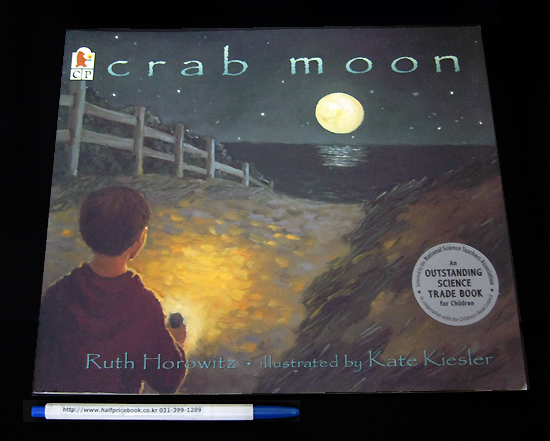
[ 책 소개 ]
* NSTA-CBC(미국과학교사협회) Outstanding Science Trade Book for Children
말발굽게(Horseshoe Crab)는 지구상에 살아있는 동물 중에서 가장 오래된 종입니다. 공룡이 살던 시기보다도 이전인 3억 5천만년 전부터 지금까지 거의 진화하지 않고 원시의 모습을 지니고 있습니다. 둥그런 갑옷껍질 밑에 몸을 숨기고 있으며, 긴 꼬리는 물 속을 헤엄칠 때 방향타 역할을 하고, 12개의 다리는 먹이를 잡을 때 사용됩니다. 말발굽게는 명칭과는 달리 게와는 유사성이 없으며, 오히려 거미나 전갈들과 친척관계입니다.
말발굽게는 매년 6월 보름달이 뜨면 대서양의 미국 동부해안에 알을 낳기 위해 깊은 바다에서 나와서 해변으로 올라옵니다. 최근에는 산란지인 미국 동부해안이 인간에 의해 개발됨으로써 급격하게 개체수가 줄어들고 있다고 합니다.
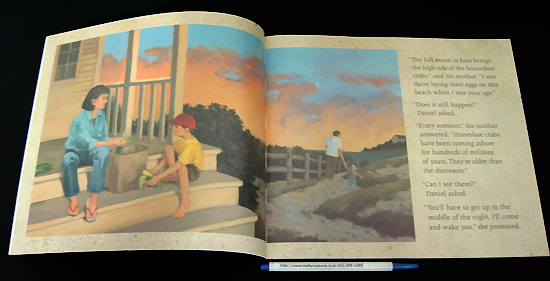
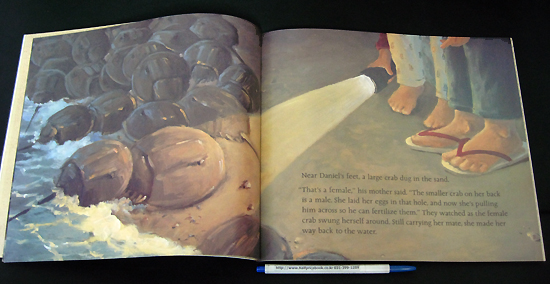
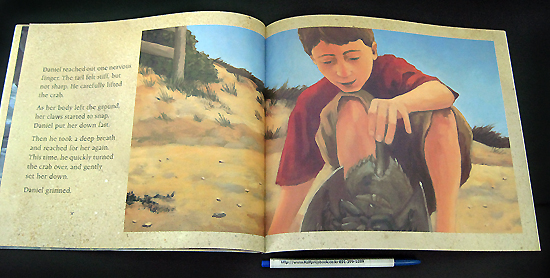
이 책은 7살 다니엘이 가족과 함께 바닷가의 오두막집을 빌려서 휴가를 온 후, 보름달이 뜬 밤에 엄마와 함께 해변에 가서 말발굽게가 산란을 위해 모래사장으로 떼를 지어 올라오는 모습을 관찰하는 내용입니다. 다음날 아침 다니엘은 바닷가에서 몸이 뒤집혀져서 꼼짝달삭 못하는 말발굽게를 발견하고는 막대기를 이용해서 몸을 바로 뒤집어주고 바닷속으로 돌려 보내줍니다...
[ 서지 정보 ]
Edition: Paperback: 32 pages
ISBN-10: 076362313X
ISBN-13: 978-0763623135
책 크기: 27cm x 23.2cm
[ 영문 서평 ]
Book Description
Introduce young naturalists to the mysterious high tide of the horseshoe crabs.
One June night, under the full moon, Daniel's mother wakes him up to see the extraordinary sight of horseshoe crabs spawning on the beach-just as they have every spring for 350 million years. In the morning, Daniel returns to find one lone crab, marooned upside down in the sand. Is it dead? Can he save it? Like a perfect weekend at the beach, CRAB MOON leaves an indelible memory of a special adventure between a parent and a child. And with luminous paintings by Kate Kiesler, it relays a powerful message that each of us must do our part to preserve even earth's oldest creatures.
Children's Literature
Daniel and his family arrive at their beach cottage in time to witness the magic of the spawning of horseshoe crabs in the full moon. As they have for millions of years, the multitude of crabs come ashore to lay, fertilize, and bury their eggs, then return to the sea. The next morning Daniel finds the beach empty except for one crab stuck on her back. He gently turns her over so she can return as well. "See you next summer" is his hope. The doublepage paintings framed with sandy borders are just naturalistic enough to carry us to the beach, to sense the wonder of the starry moonlit night that Kiesler suggests rather than details. She creates a sequence of very quiet scenes that help us feel our connection with these ancient creatures and their ritual, along with Daniel. A page of facts about horseshoe crabs is included. 2000, Candlewick Press, Ages 4 to 8, $15.99. Reviewer: Ken Marantz and Sylvia Marantz
School Library Journal
On a summer weekend, Daniel, seven, and his family arrive at a seaside cottage. His mother remembers the seasonal spawning of horseshoe crabs on this selfsame shore when she was a child, and, at Daniel's urging, wakes him in the middle of the night to witness the phenomenon under the full moon. Hand in hand, they go to the moonlit beach and find the horseshoe crabs surging to the sand in clambering multitudes, caught in a springtide rhythm almost as old as time. The next morning, viewing the scene, Daniel finds "-one last, lonely crab marooned upside down," rights her, and follows her slow progress to the sea. Horowitz's quiet text reflects the moonlit awe of this ageless pattern, and Kiesler's luminous oils capture freeze-frame moments in perfect step (including the sandy borders and backgrounds). A page of Limulus facts is appended, which describes the stresses these ancient animals are encountering. Pair this with Mark Shasha's The Night of the Moonjellies (S & S, 1992; o.p.) for a quiet look at two unheralded, somewhat unlovely, but important marine creatures.
Kirkus Reviews
June's full moon casts an atmospheric glow over Kiesler's (Old Elm Speaks, 1998) soft-focus shore scenes in this brief consciousness raiser. Seven-year-old David follows his mother down to the beach near their summer rental one night and watches, enchanted, as horseshoe crabs emerge to lay their eggs. The next morning, he finds an upended straggler, gingerly rights her, and watches her make her way, "quiet as a queen," back to the sea. Along with books such as Saviour Pirotta's Turtle Bay (1997), this conveys a respectful attitude toward sea- and shore-dwelling wildlife in an unpreachy way. Young children whose interest is piqued by David's brief encounter with such ancient, alien-looking creatures will welcome the concluding page of general horseshoe crab facts.
|
| * 최근 이 작품을 구입하신 분들의 다른 선택 |
A River Ran Wild
An IRA Teachers's Choice, 페이퍼백 |
Made by Maxine
하드커버, 슈퍼바이 |
Sounder
Newbery Medal 수상도서, 슈퍼바이 |
The Power of Henry's Imagination
하드커버, 슈퍼바이 |
|
| |
|
|< << [1] [2] [3] [4] [5] [6] [7] [8] [9] [10] >> >|
|
|
|



 전체 카테고리


 실시간 벼룩
 종류별 분류


 재고가 없는 상품