|
|
|
|
 |
 이전 | 이전 |  목록 | 다음 목록 | 다음 |
|
|
상세보기1 |
상세보기2 |
|
확대 이미지 : 상세보기1
|
확대 이미지 : 상세보기2
|
[ 책 소개 ]
2007년 Caldecott상을 수상한 Gone Wild의 연작입니다.
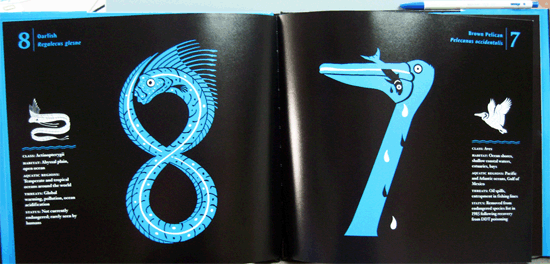
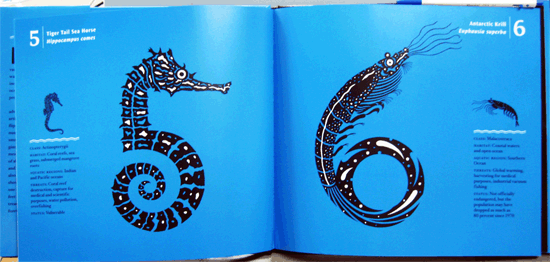
타임, 워싱턴포스트, 뉴욕타임즈, 아이가 등 미국의 유력 신문과 잡지에 그림을 실어 온 저명한 Illustrator인 David McLimans의 작품이며, 세계 각 지역의 바다에서 사는 22종류의 해양생물들을 숫자들의 형태를 이용한 절묘한 흑백의 그래픽 그림으로 보여줍니다. 아울러 각 페이지마다 해당 동물들의 명칭, 종류, 서식지, 멸종 위기 원인과 상황 등에 관한 정보도 실려 있습니다.
청새치, 바다코끼리, 아프리카팽귄, 험프백 고래, 알바트로스, 대서양 바늘고기, 지중해 몽크물개, 카네이션 산호, 병코돌고래 등 26종의 해양생물들이 수록되어 있으며, 책 말미에는 각각의 동물들에 대한 설명글이 실려 있습니다. 아울러 1, 10, 100, 1000, 10000, 100000, 1000000, 10000000, 100000000, 1000000000 등 1부터 10억까지의 숫자를 이용한 재미있는 Ocean Facts들과 5대양별 면적, 가장 긴 바다산맥, 바다에서의 화산활동을 비롯한 바다에 관한 다양한 상식들도 함께 실려 있습니다.
독특하고 창의력이 넘치는 그래픽은 독자들의 눈을 사로 잡는 매력이 있습니다.
큰 사이즈의 튼튼한 하드커버책입니다.
[ 서지 정보 ]
Hardcover: 40 pages
ISBN-10: 0802797709
ISBN-13: 978-0802797704
책 크기 : 28cm x 25cm
[ 영문 서평 ]
Book Description
Dive down to the depths of our planet’s oceans and see the stunning variety of creatures that call this watery environment home. These incredible marine animals and their ocean habitats are among our most precious and endangered resources.
In a dazzling underwater adventure, Caldecott Honor–winning artist David McLimans uses fins, flippers, and tentacles to create numerical masterpieces. From the smallest tiger tail sea horse to the giant humpback whale, this aquatic menagerie will captivate readers of all ages as they count up to ten and back down again. McLimans also explores the powers of ten to showcase amazing ocean facts from one to one billion! Once you wet your feet with this eye-popping visual treat, your view of the ocean will be forever transformed.
School Library Journal
Using animal-shaped numbers from 1 to 10 and back again, McLimans introduces various marine creatures and their survival status. An African penguin, sea lamprey, tiger tail sea horse, and blue-ringed octopus are among the featured species. The text boxes accompanying each entry are not offset as distinctly as they were in the author's Gone Wild (Walker, 2006), so viewers are not sure where to look first. The boxes include the class to which each marine animal belongs, its habitat, aquatic region, threats, and status ("vulnerable," "endangered," and "critically endangered"), but the terms are not defined. Between the count up and count down is a spread of "Ocean Facts by the Numbers," which presents various statistics in the power of 10. For example, "Less than 1 percent of water on Earth is freshwater," "Plastic waste kills up to 1 million seabirds every year," and "About 1 billion people live in coastal urban centers, and the resulting overdevelopment threatens almost 50 percent of the world's coastal habitats." The black silhouetted numbers are sinuous and compelling in this unique and imaginative description of the dangers facing ocean life today.
Booklist
From the author of Caldecott Honor Book Gone Wild: An Endangered Animal Alphabet Book (2006), comes this picture book that uses numbers as a vehicle for presenting striking images and bits of information about animals living in oceans and along shorelines. A typical page features a large picture representing a number from 1 to 10, with each numeral made up of all or part of a sea creature’s body. The pages also list the animals’ common and scientific names, class, habitat, region, threats, and status. The large pictures are bold black-and-white images on blue pages or blue-and-white ones on black. Appended pages present further information on the mentioned animals, threats to the world’s oceans as well as a list of organizations and a bibliography of recommended reading. Given the book’s “numbers 1-to-10” concept, picture-book format, vis-a-vis its relatively high reading level, the audience is an open question, but perhaps creative teachers will find the answer.
|
| * 최근 이 작품을 구입하신 분들의 다른 선택 |
A Long Way from Chicago
Newbery 수상작, 페이퍼백 |
Made by Maxine
하드커버, 슈퍼바이 |
Miss Daisy Is Still Crazy!
My Weirdest School, Book 5, 페이퍼백, 슈퍼바이 |
The Berenstain Bears A Neighbor in Need
An I Can Read Book, 1단계, 슈퍼바이 |
|
| |
|
|< << [1] [2] [3] [4] [5] [6] [7] [8] [9] [10] >> >|
|
|
|



 전체 카테고리


 실시간 벼룩
 종류별 분류


 재고가 없는 상품